
Nuisance Relief Respirators (OV & Acid Gas)
Which nuisance-relief respirator is right for your application in 2026?
Short answer: Pick a nuisance relief respirator by the particulate hazard first and the odor second — the 3M 8247 R95 is the go-to for automotive finishing, spray coatings, and adhesive work where oil mist and trace organic vapors are both present. For N95 programs with nuisance OV in non-oil environments, the Moldex 2800N95 HandyStrap adds a valve for extended-shift comfort. These respirators are for nuisance-level exposures — not substitutes for chemical cartridge respirators when vapor concentrations are at or above OSHA action levels.
Nuisance Relief Respirators (2026)
Nuisance-relief respirators are NIOSH-certified particulate respirators (N95, R95, or P95 class) that incorporate a secondary layer of activated carbon or chemical sorbent providing nuisance-level protection against organic vapors (OV) or acid gases (AG) at concentrations below 10 ppm. They are not chemical cartridge respirators — they do not provide full-spectrum protection against solvents, acid gases, or other chemicals at industrial concentrations. This collection covers 14 products across three filtration classes and two nuisance-relief types, from 3M, Moldex, and Gerson, suited to spray coating, automotive refinishing, welding fume with nuisance vapors, and similar tasks. For environments where chemical concentrations exceed nuisance levels or where OSHA requires a chemical cartridge, see our half-mask respirators. For the broader disposable lineup, see all disposable respirators.
Editor's pick — 3M 8247 R95 Nuisance OV Respirator
Best nuisance-relief respirator for oil-mist environments with trace organic vapors — automotive clear coat, solvent-based adhesives, and lacquers. R95 oil resistance + nuisance OV layer in the proven 3M cone form factor.
What this collection covers
Thirteen disposable respirators, every one of them carrying a nuisance relief layer — seven N95, four R95 and two P95, with ten offering organic vapor relief and five acid gas. Ten have an exhalation valve. The vendors are Moldex (six), 3M (five) and Gerson (two).
One number applies to all thirteen and it is worth stating up front: the Assigned Protection Factor is 10. Every product here is a filtering facepiece, and OSHA sets the APF by how well the facepiece seals rather than by what is inside it — so the relief layer does not raise it, and neither does moving from N95 to P95. If your measured exposure needs more than ten times the permissible limit, the answer is a half-mask or full facepiece, not a different disposable.
⚠ What you will not find here: cartridges. Several nuisance-relief filters and cartridges are stocked — the 3M 2097 and 2096, the Secure Click range, the GVS Elipse filters, the Gerson XP100 — but those fit elastomeric respirators and live in Respirator Filters & Cartridges. This page is disposables only.
- R95 + Nuisance OV: 3M 8247, Moldex 2840R95 HandyStrap — oil-resistant, for spray and automotive environments.
- R95 + Nuisance Acid Gas: 3M 8246 — oil-resistant, for battery rooms and acid-adjacent tasks. If oil is not a factor, the Moldex 2500N95 covers the same acid-gas odors at N95 rather than R95.
- N95 + Nuisance OV: Moldex 2800N95 HandyStrap, Moldex 2400N95, Moldex 4800 AirWave, Moldex M2800N95 Special Ops, Gerson 1745 N95 — for non-oil environments with trace OV.
- N95 + Nuisance Acid Gas: Moldex 2500N95 — N95 filtration with acid-gas nuisance layer and valve.
- P95 + Nuisance OV: 3M 8577 P95 — oil-proof filtration with nuisance OV, for environments with both heavy oil mist and trace organics.
- P95 + Nuisance Multi-Gas: 3M 8576 P95 — oil-proof with nuisance OV and acid-gas combined layer.
- N95 Welding (nuisance fume): 3M 8214 N95 — designed specifically for welding fume particulates with nuisance-level protection.
- R95 Gerson: Gerson 1845 R95 — US-made R95 with valve and gasket seal.
Nuisance-relief respirator comparison — filtration class and relief type
| Model | Class | Relief type | Valve | Best for |
|---|---|---|---|---|
| 3M 8247 | R95 | OV | No | Auto/spray/oil-mist + trace OV |
| 3M 8246 | R95 | AG | No | Battery/galvanizing/acid nuisance |
| 3M 8577 | P95 | OV | No | Heavy oil mist + OV (oil-proof) |
| 3M 8576 | P95 | OV + AG | No | Oil-proof + dual nuisance gas |
| Moldex 2800N95 | N95 | OV | Yes | Non-oil + OV nuisance, valve comfort |
| Moldex 2500N95 | N95 | AG | Yes | Non-oil + acid gas nuisance, valve |
| Moldex 2840R95 | R95 | OV | Yes | Oil-mist + OV nuisance + valve comfort |
| 3M 8214 | N95 | Welding fume | No | Welding fume particulates |
Nuisance-relief respirator decision guide
- Oil-mist environment + trace OV (spray coating, lacquers, auto body): Choose 3M 8247 R95 (no valve) or Moldex 2840R95 (valve) — R95 oil resistance is essential here.
- Heavy oil mist + trace OV (oil-wet machining, heavy mist): Choose 3M 8577 P95 — oil-proof P class with nuisance OV layer, no service-life oil restriction.
- Heavy oil mist + trace OV and acid gas: Choose 3M 8576 P95 — dual nuisance layer (OV + AG) with oil-proof filtration.
- Non-oil environment + trace OV (light solvent, adhesive nuisance odors): Choose Moldex 2800N95 or Moldex 2400N95 — N95 with nuisance OV; lower cost than R95 when oil mist is not present.
- Battery rooms, acid etching, galvanizing (no oil): Choose Moldex 2500N95 or 3M 8246 R95 — N95 for non-oil or R95 for oil-adjacent acid-gas environments.
- Welding fumes (general welding shop): Choose 3M 8214 N95 — specifically designed for welding fume particulates; see also welding respirators.
- All-day wear or warm environments: Choose any valve-equipped model (Moldex 2800/2400/2500/2840/2940) — exhalation valves reduce heat and CO₂ buildup significantly during sustained use.
Shop nuisance relief respirators on Amazon → 3M 8247 R95 3M 8577 P95 Moldex 2800N95 3M 8214 Welding
How to choose a nuisance-relief respirator
What "nuisance level" actually means — and what it does not mean
NIOSH defines nuisance-level protection for organic vapors and acid gases as appropriate at concentrations below 10 ppm — the level where odors cause discomfort but exposures remain below OSHA PELs and NIOSH RELs. The activated-carbon or sorbent layer in these respirators is thin by design — intended for odor reduction and nuisance relief, not as a cartridge substitute. If you can smell chemicals through your respirator despite a nuisance layer, the concentration has exceeded the nuisance limit — switch immediately to a half-mask with proper OV or AG cartridges. Nuisance-relief respirators are not OSHA-compliant protection for chemical work above nuisance concentrations.
N95 vs R95 vs P95 — which filtration class for nuisance environments?
All three nuisance-relief classes provide 95% minimum filtration. The difference is oil resistance: N95 is not oil-resistant (fine for environments without oil mist), R95 is resistant to oil aerosols for up to 8 hours (for machining, light spray with oil-based products), and P95 is oil-proof with no service-life oil restriction (for heavy oil-mist environments). Match the filtration class to your environment's oil-mist content, not just to the chemical nuisance component. See our filter-type guide for the full N/R/P breakdown.
OV vs acid-gas relief — reading the product label
Organic vapor (OV) nuisance relief targets hydrocarbons: benzene, toluene, xylene, acetone, and similar solvents at trace concentrations. Acid gas (AG) nuisance relief targets inorganic acids: HCl, SO₂, H₂S, and similar gases at trace concentrations. Products like the 3M 8576 P95 include both OV and AG layers — useful when both chemical classes are present at nuisance concentrations. Do not assume a nuisance-OV respirator provides acid-gas protection or vice versa.
Moldex Special Ops (M2800N95) — when is the black model appropriate?
The Moldex M2800N95 Special Ops provides identical N95 + nuisance OV + valve protection as the standard 2800 in a black colorway preferred by some industrial and tactical users. No functional difference in protection — color choice only.
When to upgrade to a chemical cartridge respirator
Upgrade immediately when: (1) you smell chemicals through the nuisance layer, (2) your air monitoring shows OV or AG concentrations at or above OSHA action levels, (3) your written respiratory protection program specifies a cartridge class respirator for the task, or (4) the work involves confined spaces, enclosed areas, or prolonged exposure to solvent-heavy coatings. See the complete disposable guide for the selection decision tree. For cartridge respirators, browse our half-mask collection.
Regulatory context — nuisance relief under OSHA 1910.134
OSHA 29 CFR 1910.134 distinguishes between respirators required by a written respiratory protection program (voluntary-use supplemental equipment) and those required to meet engineering-control hierarchy. Nuisance-relief disposable respirators used voluntarily (when exposures are below OSHA action levels) still require employer compliance with at minimum the voluntary-use elements of 1910.134. When exposures exceed the action level for any regulated substance, a full written program is mandatory regardless of respirator type. NIOSH nuisance-relief designations are not OSHA-approved as protection for regulated OV or AG concentrations above the PEL — they are not chemical cartridge equivalents. For any environment where chemical work exceeds OSHA action levels, consult your respiratory protection program or a CIH. All products in this collection are NIOSH-certified under 42 CFR Part 84; TC-approval numbers are verifiable on the NIOSH Certified Equipment List.
Related collections and resources
- All disposable respirators — full disposable FFR catalog
- R95 respirators — oil-resistant 95% filtration, all models including nuisance-relief
- N95 respirators — standard 95% non-oil-resistant class
- Valved respirators — all disposable models with exhalation valve
- Welding respirators — fume-specific collection including 3M 8214
- Paint spray respirators — OV and particulate protection for spray applications
- Half-mask respirators — cartridge-based chemical protection for concentrations above nuisance level
- Moldex disposable respirators
- 3M disposable respirators
- Disposable Respirators Complete Guide (2026)
- Respirator Filter Types Explained
- Why Can I Smell Chemicals Through My Respirator?
- ESLI vs Written Change Schedule Guide
Our methodology: how we evaluated these respirators
All thirteen listings were read against their own manufacturer listings and the collection was measured rather than described from memory: thirteen disposable respirators, all thirteen stating a nuisance relief layer, split seven N95 / four R95 / two P95 and ten OV / five acid gas, from Moldex (6), 3M (5) and Gerson (2). Filter class, relief type and NIOSH certification are repeated only where the manufacturer's listing states them — and we name only products that are actually in this collection, because a product being stocked elsewhere on the site is not the same as it being on this shelf. Where a specification is routinely misread, as nuisance relief is, we state what it is not as plainly as what it is. Standards context is mapped to OSHA 29 CFR 1910.134, 29 CFR 1910.1053 and the NIOSH filter classes under 42 CFR Part 84. We do not fit-test or bench-test respirators and we hold no certification. WC Safety earns Amazon affiliate commissions on outbound clicks; that has no bearing on inclusion or ordering.
Nuisance Relief Respirator FAQ
What is a nuisance-relief respirator?
A nuisance-relief respirator is a NIOSH-certified particulate respirator (N95, R95, or P95 class) that includes a secondary sorbent layer providing protection against organic vapors, acid gases, or both at concentrations below 10 ppm — the "nuisance" level where odors cause discomfort but concentrations are below OSHA PELs. They provide particulate filtration at the rated class (95%) plus nuisance-level chemical odor reduction. They are not chemical cartridge respirators and must not be used as such.
Can a nuisance-relief respirator be used in place of a chemical cartridge respirator?
No. Nuisance-relief layers are designed for trace concentrations below 10 ppm. Chemical cartridge respirators (half-masks with OV, AG, or combination cartridges) are required when chemical concentrations approach or exceed OSHA PELs or NIOSH RELs. If you can smell chemicals through a nuisance-relief respirator, upgrade immediately — breakthrough odor means the nuisance sorbent is saturated or concentrations have exceeded nuisance level.
What is the difference between nuisance OV and nuisance acid-gas relief?
Nuisance organic vapor (OV) relief targets hydrocarbon vapors: solvents, paints, adhesives, lacquers, and similar organic compounds at trace concentrations. Nuisance acid gas (AG) relief targets inorganic acids: HCl, SO₂, H₂S, and similar gases at trace concentrations. Choose OV relief for spray coating, adhesive, and solvent environments. Choose AG relief for battery charging, acid pickling, galvanizing, and similar acid-adjacent work. Some models (3M 8576 P95) combine both layers.
3M 8247 vs 3M 8577 — R95 or P95 nuisance OV?
Both provide 95% filtration with nuisance OV relief. The 8577 is P95 — oil-proof with no service-life oil restriction. The 8247 is R95 — resistant to oil but with an 8-hour service limit in oil-mist environments. Choose P95 (8577) when oil-mist concentrations are heavy or shift durations in oily conditions exceed 8 hours. Choose R95 (8247) for lighter oil-mist environments or spray applications where oil-aerosol contact is intermittent.
What is a nuisance odor respirator, and is it the same thing?
Yes — nuisance odor respirator and odor respirator are the everyday names for what manufacturers label nuisance-level OV or AG relief, and people searching either phrase are looking for exactly these products. The plain-language version is accurate: what you are buying is a particulate respirator that also takes the edge off a smell. It is worth keeping the plain wording in mind precisely because it sets the right expectation — an odor respirator manages odor. It does not manage exposure. The moment the concern shifts from "this is unpleasant" to "this might be harmful", the product category changes.
Does the relief layer change the particulate rating?
No. An N95 with nuisance OV relief filters the same at least 95% of non-oil particles as an N95 without it, and the same holds for R95 and P95. The carbon layer sits alongside the particulate media rather than replacing it, so the NIOSH class on the label is unaffected. What the layer does change is service life in one specific way: a saturated sorbent stops reducing odor long before the particulate filter is loaded, which is why odor breakthrough is a signal to change the respirator even when breathing resistance still feels normal.
Which class should I choose for a nuisance level organic vapor respirator?
Decide on the particulate hazard first, because the relief layer is the same idea in every class. N95 for dry dust with no oil present — seven of the thirteen here, including the Moldex 2400 and 2800 and the 3M 8214 welding model. R95 if oil aerosols are intermittent, rated for up to eight hours of oil exposure — four here, including the 3M 8247 and the Moldex 2840. P95 if oil is continuous, since P-class is oil-proof with no time limit — two here, the 3M 8576 and 8577. Then pick OV relief for solvent and paint odors, or acid gas relief for chlorine, sulfur and etching odors.
Can I wear one of these for spray painting?
Only for the particulate half of the job, and that distinction matters more in painting than anywhere else. Overspray is a particulate and an R95 or P95 handles it; the solvent vapor coming off the paint is not, and in a booth or a small enclosed space it will be far above 10 ppm. A nuisance-relief disposable will make the job smell better while leaving the actual vapor exposure unaddressed, which is the most dangerous possible combination — it removes the warning signal without removing the hazard. For any real spray application use a half-mask with organic vapor cartridges and a particulate pre-filter.
Do nuisance-relief respirators require fit testing?
Yes. All tight-fitting respirators required by OSHA (including nuisance-relief disposables used to meet OSHA standards) require fit testing under 29 CFR 1910.134. If the respirator is voluntary-use (exposure below OSHA action level), minimal requirements apply but basic seal checks before each use are still recommended. See our fit testing guide for the full protocol.
Why does the 3M 8214 say "welding" if it's just an N95?
The 3M 8214 N95 is specifically designed and NIOSH-approved for welding fume particulates. Welding fumes include metal oxides (iron, manganese, chromium) that vary in particle size and composition compared to standard test aerosols. The 8214 carries NIOSH N95 certification for welding fume filtration. It does not protect against chemical gases generated in welding — for high-concentration ozone, NOx, or CO from welding, a supplied-air or chemical cartridge respirator is required. See welding respirators for the full selection.
Is the Moldex Special Ops (M2800N95) the same protection as the 2800N95?
Yes — identical NIOSH N95 certification and nuisance OV relief. The M2800N95 Special Ops is the same respirator in a black colorway. No difference in filtration class, nuisance-relief capacity, valve, or performance.
Can I use a nuisance-relief N95 for silica dust if I'm also near trace solvents?
Yes, a nuisance-relief N95 provides NIOSH-certified N95 filtration for silica dust (meeting OSHA 29 CFR 1926.1153 and 1910.1053 requirements) plus nuisance-level OV reduction for trace solvent odors in the same environment. Confirm that solvent concentrations are below the nuisance threshold (<10 ppm) before relying on the nuisance layer — if concentrations are higher, a cartridge respirator is required for the chemical component. See silica dust respirators for the dedicated silica collection.
What are the Moldex 2400 vs 2800 N95 nuisance OV models — what's the difference?
Both provide N95 + nuisance OV + exhalation valve protection. The Moldex 2800N95 HandyStrap features Moldex's proprietary HandyStrap design — an integrated front strap that maintains cup shape and keeps the facepiece off the lips during high breathing demand. The 2400N95 is a standard cup design without the HandyStrap. Choose 2800 if workers find the cup-against-lips sensation uncomfortable; choose 2400 as the cost-optimized standard option.
Disposable respirator guides & comparisons
WC Safety buyer's guides and head-to-head comparisons:
- best nuisance relief respirators — 7 N95/P95 picks with OV or AG nuisance protection — 3M 8577, Moldex 2400N95, Gerson 1745
- best disposable respirator for painting — 7 picks with nuisance OV/AG protection — 3M 8577, Gerson 8000, Moldex 2800N95
- best R95 respirators — 7 oil-resistant picks — Gerson 1840, 3M 8247, Moldex 2740R95, ranked by use case
- N95 vs R95 respirator — filter class comparison — oil resistance, when each is required, cost difference
Why trust this nuisance relief respirator collection? WC Safety is an independent industrial PPE review site stocking every nuisance-relief respirator in this collection for sale to safety managers and field supervisors. Curation is editorial — no manufacturer input or paid placement. Every product is verified against its NIOSH 42 CFR Part 84 TC-approval on the NIOSH Certified Equipment List. Disclosed: WC Safety reviews every product shown and earns Amazon affiliate commissions on outbound clicks; neither influences inclusion or ranking.
Curated by Steven Eaton, WC Safety Editorial — Industrial respiratory protection desk · specialization: nuisance-level chemical relief, N/R/P class selection for spray-coating and chemical-adjacent environments, OSHA 29 CFR 1910.134 compliance.
Last reviewed: · Sources reviewed: NIOSH 42 CFR Part 84 Subpart K, OSHA 29 CFR 1910.134, NIOSH NPPTL Certified Equipment List, 3M TDS (8246/8247/8576/8577/8214), Moldex product specifications (2400/2500/2800/2840/2940/4800).
Editorial standard: Zero sponsored listings. No manufacturer input. Lineup curated on certification and application fit — not vendor preference.
Last reviewed: · Sources reviewed: NIOSH 42 CFR Part 84 Subpart K, OSHA 29 CFR 1910.134, NIOSH NPPTL Certified Equipment List, 3M TDS (8246/8247/8576/8577/8214), Moldex product specifications (2400/2500/2800/2840/2940/4800).
Editorial standard: Zero sponsored listings. No manufacturer input. Lineup curated on certification and application fit — not vendor preference.
How this nuisance relief respirator collection is curated
Primary sources: (1) NIOSH 42 CFR Part 84, Subpart K — N, R, and P class filtration standards; (2) NIOSH NPPTL CEL — TC-number verification; (3) OSHA 29 CFR 1910.134 — APF table and voluntary/mandatory use distinction; (4) Manufacturer TDS (3M, Moldex, Gerson) — nuisance-relief capacity and application guidance; (5) ANSI/ASSE Z88.2-2015 — selection criteria for particulate + chemical nuisance environments.
Inclusion criteria: Product must carry NIOSH certification (N95, R95, or P95 minimum) plus a verified nuisance OV or AG relief designation from the manufacturer.
Update cadence: Reviewed quarterly and on any NIOSH or manufacturer guidance change.
Primary sources: (1) NIOSH 42 CFR Part 84, Subpart K — N, R, and P class filtration standards; (2) NIOSH NPPTL CEL — TC-number verification; (3) OSHA 29 CFR 1910.134 — APF table and voluntary/mandatory use distinction; (4) Manufacturer TDS (3M, Moldex, Gerson) — nuisance-relief capacity and application guidance; (5) ANSI/ASSE Z88.2-2015 — selection criteria for particulate + chemical nuisance environments.
Inclusion criteria: Product must carry NIOSH certification (N95, R95, or P95 minimum) plus a verified nuisance OV or AG relief designation from the manufacturer.
Update cadence: Reviewed quarterly and on any NIOSH or manufacturer guidance change.
Affiliate & editorial disclosure
WC Safety participates in the Amazon Associates program. "Check price on Amazon" and Amazon buttons are affiliate links earning a commission at no additional cost to you. Every purchase happens on the retailer’s own site; nothing is sold here directly. Neither affiliate status nor listing position influences curation or ranking. This page does not constitute medical, legal, or regulatory advice. Nuisance-relief respirators are not substitutes for chemical cartridge respirators — confirm exposure levels through air monitoring before selecting respiratory protection for chemical environments.
WC Safety participates in the Amazon Associates program. "Check price on Amazon" and Amazon buttons are affiliate links earning a commission at no additional cost to you. Every purchase happens on the retailer’s own site; nothing is sold here directly. Neither affiliate status nor listing position influences curation or ranking. This page does not constitute medical, legal, or regulatory advice. Nuisance-relief respirators are not substitutes for chemical cartridge respirators — confirm exposure levels through air monitoring before selecting respiratory protection for chemical environments.


Moldex M2800N95 Special Ops HandyStrap N95 — Nuisance OV + Valve, Black
Moldex
Original price
$74.64
-
Original price
$74.64
Original price
$74.64
$74.64
-
$74.64
Current price
$74.64
Short answer: the moldex m2800n95 special ops handystrap n95 is covered below on the specifications its own listing publishes, the standards it is ...
View full details

Moldex 4800N95 AirWave Respirator — Nuisance OV + SmartStrap
Moldex
Original price
$88.73
-
Original price
$88.73
Original price
$88.73
$88.73
-
$88.73
Current price
$88.73
WC Safety Editorial Pick — Moldex 4800N95 — AirWave SmartStrap N95 with nuisance OV relief for dust + light OV environments. Read our full review ...
View full details

Moldex 2840R95 HandyStrap R95 Respirator — Nuisance OV + Valve
Moldex
Original price
$30.92
-
Original price
$30.92
Original price
$30.92
$30.92
-
$30.92
Current price
$30.92
Short answer: the moldex 2840r95 handystrap r95 respirator is covered below on the specifications its own listing publishes, the standards it is ce...
View full details

Moldex 2800N95 HandyStrap N95 Respirator — Nuisance OV + Valve
Moldex
Original price
$39.00
-
Original price
$39.00
Original price
$39.00
$39.00
-
$39.00
Current price
$39.00
Short answer: the moldex 2800n95 handystrap n95 respirator is covered below on the specifications its own listing publishes, the standards it is ce...
View full details

Moldex 2500N95 N95 Disposable Respirator — Nuisance Acid Gas + Valve
Moldex
Original price
$18.99
-
Original price
$18.99
Original price
$18.99
$18.99
-
$18.99
Current price
$18.99
Short answer: the moldex 2500n95 n95 disposable respirator is covered below on the specifications its own listing publishes, the standards it is ce...
View full details
Moldex 2400N95 N95 Disposable Respirator — Nuisance OV + Valve
Moldex
Original price
$74.64
-
Original price
$74.64
Original price
$74.64
$74.64
-
$74.64
Current price
$74.64
Short answer: the moldex 2400n95 n95 disposable respirator is covered below on the specifications its own listing publishes, the standards it is ce...
View full details
Gerson 1845 R95 Particulate Respirator with Valve, Gasket, and Nuisance Vapor Relief (Box of 5)
Gerson
Original price
$31.99
-
Original price
$31.99
Original price
$31.99
$31.99
-
$31.99
Current price
$31.99
EDITORIAL REVIEW — Gerson 1845 R95 Judged on the published NIOSH designation, the protection factor OSHA actually assigns it, and how the format f...
View full details
Gerson 1745 N95 Respirator with OV-AG Nuisance Relief – Organic Vapor and Acid Gas, Made in USA (Box of 10)
Gerson
Original price
$22.99
-
Original price
$22.99
Original price
$22.99
$22.99
-
$22.99
Current price
$22.99
EDITORIAL REVIEW — Gerson 1745 N95 Judged on the published NIOSH designation, the protection factor OSHA actually assigns it, and how the format f...
View full details

3M 8577 P95 Disposable Respirator Nuisance Organic Vapor Protection with Cool Flow Valve
3M
Original price
$11.99
Original price
$11.99
-
Original price
$11.99
Original price
$11.99
Current price
$11.29
$11.29
-
$11.29
Current price
$11.29
EDITORIAL REVIEW — 3M 8577 P95 Disposable Respirator Nuisance Organic Vapor Protection with Cool Flow Valve. Check price on Amazon →As an Amazon A...
View full details
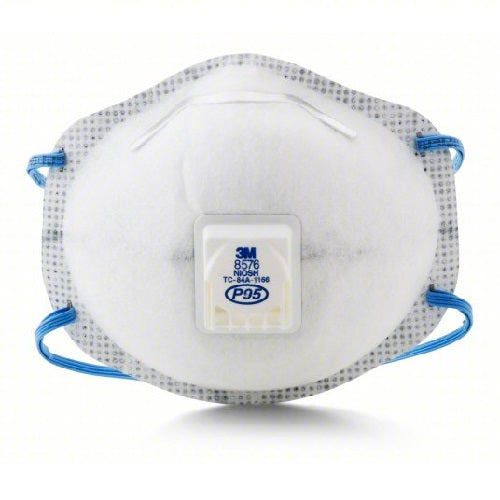
3M 8576 P95 Disposable Respirator Nuisance Acid Gas Protection with Cool Flow Valve
3M
Original price
$75.64
Original price
$75.64
-
Original price
$75.64
Original price
$75.64
Current price
$74.88
$74.88
-
$74.88
Current price
$74.88
EDITORIAL REVIEW — 3M 8576 P95 Disposable Respirator Nuisance Acid Gas Protection with Cool Flow Valve. Check price on Amazon →As an Amazon Associ...
View full details

3M 8247 R95 Disposable Respirator Nuisance Level Organic Vapor Relief
3M
Original price
$109.67
Original price
$109.67
-
Original price
$109.67
Original price
$109.67
Current price
$75.05
$75.05
-
$75.05
Current price
$75.05
EDITORIAL REVIEW — 3M 8247 R95 Disposable Respirator Nuisance Level Organic Vapor Relief. Check price on Amazon →As an Amazon Associate, WC Safety...
View full details

3M 8246 R95 Disposable Respirator Nuisance Level Acid Gas Relief
3M
Original price
$109.67
Original price
$109.67
-
Original price
$109.67
Original price
$109.67
Current price
$109.32
$109.32
-
$109.32
Current price
$109.32
EDITORIAL REVIEW — 3M 8246 R95 Disposable Respirator Nuisance Level Acid Gas Relief. Check price on Amazon →As an Amazon Associate, WC Safety earn...
View full details

3M 8214 N95 Disposable Welding Respirator with Cool Flow Valve Nuisance Organic Vapor Relief
3M
Original price
$114.50
Original price
$114.50
-
Original price
$114.50
Original price
$114.50
Current price
$86.65
$86.65
-
$86.65
Current price
$86.65
EDITORIAL REVIEW — 3M 8214 N95 Disposable Welding Respirator with Cool Flow Valve Nuisance Organic Vapor Relief. Check price on Amazon →As an Amaz...
View full details