
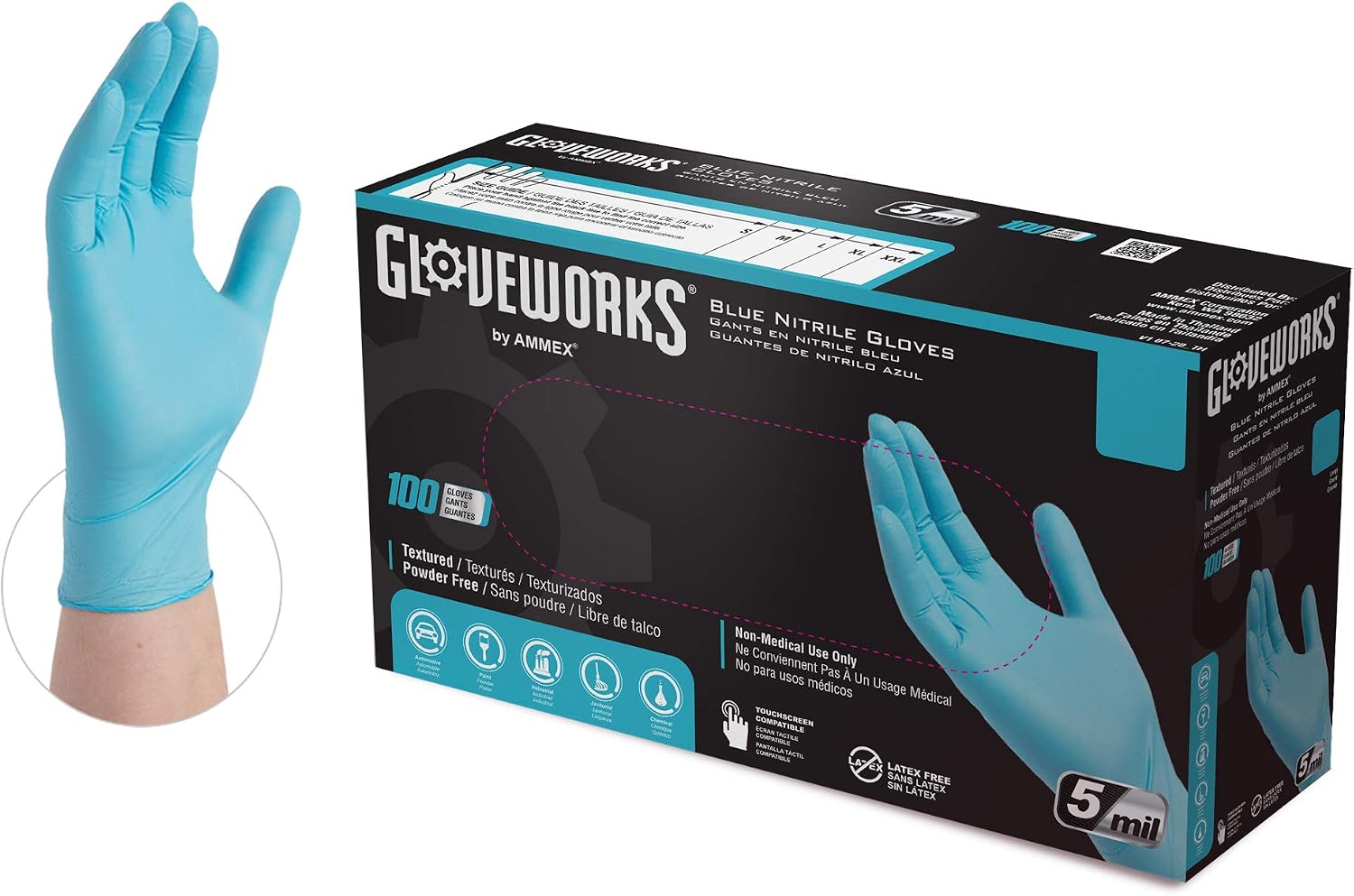
What nitrile gloves: What Are Nitrile Gloves
What is a nitrile glove? The short answer
A nitrile glove is a disposable glove made from nitrile butadiene rubber (NBR), a synthetic, latex-free rubber. Nitrile gloves are stronger and more puncture- and chemical-resistant than latex or vinyl, and because they contain no natural rubber latex they are safe for people with latex allergies. They are the most widely used disposable glove in medicine, automotive, food service and industry. This guide answers the core questions — what nitrile is, what nitrile gloves are made of, what they are used for, and what makes an exam-grade nitrile glove different — and links to our "+il("/blogs/guides/nitrile-gloves-complete-guide","complete nitrile gloves buyer's guide")+" when you are ready to choose.
Reviewed by Steven Eaton, WC Safety Editorial. Last updated June 22, 2026.
Sources: ASTM D6319 (standard specification for nitrile examination gloves), FDA 21 CFR 177 (food-contact substances) and 21 CFR 878.4460 (powdered-glove ban), EN 374 (chemical protection), and manufacturer technical documentation. Educational reference — zero sponsored listings.
Nitrile gloves are everywhere — in hospitals, repair shops, kitchens and labs — but "nitrile" itself is widely misunderstood. Below we break down exactly what the material is, how a nitrile glove is made, the jobs it is built for, and what separates a medical exam-grade nitrile glove from an industrial one. For hands-on product picks, pair this with our "+il("/blogs/guides/nitrile-gloves-complete-guide","nitrile gloves complete guide")+".
What is nitrile?
Nitrile is a synthetic rubber called nitrile butadiene rubber (NBR) — a copolymer produced by combining two monomers, acrylonitrile and butadiene. First developed in the 1930s (originally as Buna-N), it was engineered as an oil- and chemical-resistant alternative to natural rubber. The ratio of the two components is what gives nitrile its signature behavior:
- Acrylonitrile (ACN) content — higher ACN means greater resistance to oils, fuels and solvents, but a stiffer feel.
- Butadiene content — provides flexibility, stretch and tear resistance.
Glove makers tune this ratio to balance chemical resistance against comfort. Critically, nitrile contains no natural rubber latex, so it carries none of the Type I latex-allergy proteins that made natural rubber gloves a workplace hazard. That single property — latex-free protection — is why nitrile overtook latex as the dominant disposable-glove material.
What is a nitrile glove?
A nitrile glove is a thin, disposable, single-use glove made from nitrile butadiene rubber. It is one of the three main disposable-glove materials — nitrile, latex and vinyl — and it sits at the top for durability and chemical resistance. Compared with the alternatives:
- vs latex — nitrile is latex-allergy-safe and roughly three to five times more puncture-resistant. ("+il("/blogs/guides/nitrile-vs-latex-gloves","full comparison")+")
- vs vinyl — nitrile is far stronger and more chemical-resistant; vinyl is cheaper but only suited to low-risk, short tasks. ("+il("/blogs/guides/nitrile-vs-vinyl-gloves","full comparison")+")
For a three-way breakdown see our "+il("/blogs/reference/nitrile-vs-latex-vs-vinyl-gloves","nitrile vs latex vs vinyl reference")+" and "+il("/blogs/how-to-guide/how-to-choose-disposable-gloves-nitrile-vs-latex-vs-vinyl","how to choose a disposable glove")+".
What are nitrile gloves made of?
Nitrile gloves are made of nitrile butadiene rubber latex emulsion plus a small set of processing additives, shaped by an industrial dip-molding process. The components:
| Component | Purpose |
|---|---|
| Nitrile butadiene rubber (NBR) | The core film — provides the barrier, strength and chemical resistance |
| Curing agents & accelerators | Vulcanize (cross-link) the rubber so it is elastic and durable |
| Pigments / colorants | Color (blue, black, orange, purple) — cosmetic, no effect on strength |
| Chlorination or polymer coating | Inner-surface finish so the glove dons easily without powder |
How nitrile gloves are made (dip-molding):
- Hand-shaped ceramic formers are cleaned and dipped in a coagulant.
- The formers are dipped into liquid NBR latex emulsion, building a thin film.
- The film is leached (washed) to remove residual chemicals and proteins.
- The gloves are cured/vulcanized in ovens to cross-link the rubber.
- They are chlorinated or polymer-coated for easy, powder-free donning.
- Gloves are stripped from the formers, then sampled and tested to an AQL.
Because the rubber is cured with accelerators, a minority of wearers can develop Type IV allergic contact dermatitis — which is why "+il("/blogs/guides/best-accelerator-free-nitrile-gloves","accelerator-free nitrile gloves")+" exist for sensitive skin.
What are nitrile gloves used for?
Nitrile gloves are used wherever a strong, latex-free, chemical-resistant disposable barrier is needed. Their versatility is why one material spans so many industries:
| Use | Why nitrile | Guide |
|---|---|---|
| Medical, dental & lab | Latex-allergy-safe, certified barrier (AQL) | Best exam gloves |
| Automotive & mechanical | Oil/fuel resistance, puncture resistance | Best for mechanics |
| Food service | FDA food-contact rated, latex-free | Best for food service |
| Cleaning & janitorial | Resists diluted cleaners, hides stains | Best for cleaning |
| Chemical handling (splash) | Good incidental-splash protection | Best chemical-resistant |
A few stocked examples by use:
Kimtech Sterling Nitrile Exam Gloves — exam & lab work (ASTM D6319, AQL-rated). · Kimtech Sterling Nitrile Exam Gloves review
VIEW ON WC SAFETY → CHECK PRICE ON AMAZON →
VIEW ON WC SAFETY → CHECK PRICE ON AMAZON →
GLOVEWORKS HD Industrial Black Nitrile — heavy automotive & industrial work (8 mil). · GLOVEWORKS HD Industrial Black Nitrile review
VIEW ON WC SAFETY → CHECK PRICE ON AMAZON →
VIEW ON WC SAFETY → CHECK PRICE ON AMAZON →
AMMEX 3 Mil Food-Safe Nitrile Gloves — food service & light tasks (FDA food-contact). · AMMEX 3 Mil Food-Safe Nitrile Gloves review
VIEW ON WC SAFETY → CHECK PRICE ON AMAZON →
VIEW ON WC SAFETY → CHECK PRICE ON AMAZON →
As an Amazon Associate, WC Safety earns from qualifying purchases. Prices and availability are accurate as of the date shown and subject to change. Full affiliate disclosure.
What are nitrile exam gloves?
Nitrile exam gloves (nitrile examination gloves) are medical-grade nitrile gloves that meet ASTM D6319 and are FDA-cleared as medical devices. "Exam-grade" is a regulated quality tier — it means the glove has been tested to an acceptable quality level (AQL) for pinholes and barrier integrity, so you can rely on it as an infection-control barrier. Key points:
- Standard: ASTM D6319 governs nitrile examination gloves; exam gloves are FDA 510(k)-cleared Class I/II medical devices.
- AQL: the acceptable quality level (often 1.5 or lower) caps the allowable pinhole rate — lower AQL means a more reliable barrier.
- Powder-free: the FDA banned powdered exam gloves in 2017, so exam nitrile is powder-free.
- vs industrial-grade: industrial nitrile gloves skip the medical certification — fine for shop work, not for clinical barriers.
Exam gloves serve clinics, dentistry, labs, tattoo studios and any task needing a verified barrier. Chemo-rated exam gloves (tested to ASTM D6978) add protection for handling hazardous drugs. Compare options in our "+il("/blogs/guides/best-nitrile-exam-gloves","best nitrile exam gloves guide")+", and for skin-sensitive users see "+il("/blogs/guides/best-accelerator-free-nitrile-gloves","accelerator-free exam nitrile")+".
Further reading
- Nitrile gloves: the complete buyer's guide
- Nitrile glove thickness (mil) guide · Nitrile glove sizing guide
- Nitrile vs latex · Nitrile vs vinyl · Powdered vs powder-free
- Compare: nitrile gloves · all hand protection
Related nitrile gloves guides
Part of WC Safety's complete nitrile gloves guide. Keep exploring:
Best-of buyer’s guides
- Best black nitrile gloves
- Best nitrile exam gloves
- Best nitrile gloves for food service
- Best nitrile gloves for mechanics
- Best heavy-duty nitrile gloves
- Best chemical-resistant nitrile gloves
- Best nitrile gloves for cleaning
- Best accelerator-free nitrile gloves
- Best orange nitrile gloves
- Best purple nitrile gloves
Comparisons
Reference & explainers
Nitrile gloves: frequently asked questions
Is nitrile a latex or a rubber?
Nitrile is a synthetic rubber — specifically nitrile butadiene rubber (NBR) — but it contains no natural rubber latex. That distinction matters: "latex" in glove terms means natural rubber latex from the rubber tree, which carries Type I allergy proteins. Nitrile is latex-free, so it is safe for people with natural rubber latex allergies. See our nitrile vs latex (latex-free) guide.
How this guide was researched. Definitions and standards are drawn from ASTM D6319 (nitrile examination gloves), ASTM D6978 (chemotherapy-drug permeation), FDA 21 CFR 177 (food-contact) and 21 CFR 878.4460 (the 2017 powdered-glove ban), EN 374 (chemical protection), and manufacturer technical data. This is an educational reference; no first-person testing is claimed.
Disclosure. WC Safety participates in the Amazon Services LLC Associates Program; as an Amazon Associate we earn from qualifying purchases via links on this page (tag wcsafety04-20). Listings are independently selected. This guide is general information, not medical, legal or safety-compliance advice.
Related reference
Related on this site: nitrile glove sizing guide, nitrile glove thickness mil guide, nitrile vs latex vs vinyl gloves, anti vibration gloves guide, nitrile gloves: the complete buyer's guide, and how to choose disposable gloves: nitrile vs latex vs vinyl.
Why trust WC Safety
WC Safety is an independent, affiliate-supported review site. It is not a retailer: it holds no inventory, takes no orders, and earns only from qualifying purchases through clearly marked links — which never changes what a product is rated to do. Standards language is taken from the regulation text directly, and ratings are reported as the manufacturer publishes them. We run no laboratory and perform no testing of our own. Where published sources disagree, we say so and plan on the conservative figure rather than the flattering one.
Our methodology
Figures come from the regulation and the published specification, in that order. Derated numbers are calculated, not estimated. Nothing here is presented as a measured result, because we measure nothing.
Researched and written by Steven Eaton, editor of WC Safety. Steven holds no safety certification and does not test products; this page compares what manufacturers and regulators publish, with the gaps in that record marked. Last reviewed August 2026.
Frequently Asked Questions
What is nitrile?
Nitrile is a synthetic rubber called nitrile butadiene rubber (NBR) — a copolymer produced by combining two monomers, acrylonitrile and butadiene. First developed in the 1930s (originally as Buna-N), it was engineered as an oil- and chemical-resistant alternative to natural rubber.
What is a nitrile glove?
A nitrile glove is a thin, disposable, single-use glove made from nitrile butadiene rubber. It is one of the three main disposable-glove materials — nitrile, latex and vinyl — and it sits at the top for durability and chemical resistance.
What are nitrile gloves made of?
Nitrile gloves are made of nitrile butadiene rubber latex emulsion plus a small set of processing additives, shaped by an industrial dip-molding process. The components:
What are nitrile gloves used for?
Nitrile gloves are used wherever a strong, latex-free, chemical-resistant disposable barrier is needed. Their versatility is why one material spans so many industries:
What are nitrile exam gloves?
Nitrile exam gloves (nitrile examination gloves) are medical-grade nitrile gloves that meet ASTM D6319 and are FDA-cleared as medical devices. "Exam-grade" is a regulated quality tier — it means the glove has been tested to an acceptable quality level (AQL) for pinholes and barrier integrity, so you can rely on it as an infection-control barrier.
Is nitrile a latex or a rubber?
Nitrile is a synthetic rubber — specifically nitrile butadiene rubber (NBR) — but it contains no natural rubber latex. That distinction matters: "latex" in glove terms means natural rubber latex from the rubber tree, which carries Type I allergy proteins.
What is what is nitrile?
A nitrile glove is a disposable glove made from nitrile butadiene rubber (NBR), a synthetic, latex-free rubber. Nitrile gloves are stronger and more puncture- and chemical-resistant than latex or vinyl, and because they contain no natural rubber latex they are safe for people with latex allergies.
Leave a comment