
Silica Dust Respirators for Concrete Work
NIOSH-Certified Particulate Respirators · N95 · N99 · N100 · R95 · P100 · Assigned Protection Factor 10
Which silica dust respirator does your task actually require?
Short answer: whichever one carries the assigned protection factor your task row calls for. Silica is different from most hazards because OSHA does not leave the choice to you — 29 CFR 1926.1153 Table 1 lists common construction tasks, specifies the engineering control for each, and states the protection factor the respirator must meet. Every silica dust respirator here is a NIOSH-certified disposable at an assigned protection factor of 10. That covers the APF 10 rows. It does not cover the rows that require APF 25, and no filter class on this page changes that.
Before anything else: a silica dust mask bought unrated from a hardware store is not respiratory protection. Comfort and nuisance masks carry no NIOSH certification, no assigned protection factor, and no standing under the silica standard. Silica is the single most common place where people buy one and believe they are covered. Everything in this collection is certified under 42 CFR Part 84; an unrated mask is not.
What is respirable crystalline silica, and why does it matter so much?
Silica is quartz — it is in concrete, mortar, brick, block, stone, tile, grout and engineered countertop material. Intact, it is inert. Cut, ground, drilled, chipped or blasted, it fractures into particles, and the fraction small enough to reach the deep lung is what the standard calls respirable crystalline silica. That fraction is invisible in ordinary light. The dust cloud you can see is mostly the coarse material your nose and throat will catch; the part that matters is the part you cannot see.
The health outcome is why the limits are so low. Silicosis is a fibrotic lung disease, it is progressive, and it does not reverse when exposure stops. NIOSH maintains a silica topic page covering the exposure routes and the disease. The OSHA permissible exposure limit is 50 micrograms per cubic meter as an eight-hour time-weighted average, with an action level of 25 that triggers exposure monitoring. Those are small numbers by the standards of construction dust, and dry cutting can exceed them by orders of magnitude within minutes.
How does OSHA Table 1 decide which respirator you need?
Table 1 is a shortcut, and using it correctly means using all of it. Each row names a task — handheld power saws, walk-behind saws, handheld grinders, drills, jackhammers and chipping tools, drilling rigs, crushing machines, heavy equipment — and pairs it with a specified exposure control method, almost always integrated water delivery or a commercial on-tool dust collection system with a filtered vacuum. Only then does the row state the required respirator, expressed as an assigned protection factor, usually split by whether the work runs four hours or less per shift or longer, and sometimes by whether it is indoors or in an enclosed area.
Two consequences follow that most product pages skip. First, the control comes before the respirator. If you are not running water or dust collection as the row specifies, you are not on Table 1 at all, and you owe an exposure assessment under the standard's alternative method instead. A respirator does not buy you out of the control. Second, some rows require APF 25 — extended mortar-removal grinding and chipping work in enclosed spaces are the familiar examples — and an APF 25 cannot be met by anything in this collection. Read your own task row and duration rather than generalizing from another one; our walk-through of the 1926.1153 silica standard goes through the structure, and the silica exposure control tool helps you work through your own setup.
Why does the assigned protection factor cap every mask on this page?
Because it is a property of the facepiece, not the filter. Under the OSHA table in 29 CFR 1910.134, a disposable filtering facepiece is assigned 10. So is an elastomeric half mask with P100 cartridges. A full facepiece air-purifying respirator is 50. A loose-fitting powered hood is 25, and a tight-fitting powered facepiece is 1,000.
An assigned protection factor of 10 means the device is expected to reduce your exposure to one tenth of the ambient concentration. Against a 50 microgram limit, that puts a disposable inside compliance only where the airborne concentration is below roughly 500 micrograms per cubic meter. It also means the upgrade most buyers reach for does nothing for the number: going from an N95 to a P100 improves filter efficiency from 95 to 99.97 percent and adds oil resistance, and leaves the assigned protection factor at 10. Our assigned protection factors reference and the P100 versus N95 comparison both work through it.
Is an N95 enough for silica, or do you need P100?
For the dust itself, the N series is adequate. The letter in a NIOSH filter class describes oil resistance — N not oil resistant, R oil resistant for a limited period, P oil proof — and silica is a dry mineral particulate, not an oil aerosol. That is why an N95 such as the 3M 8210, the Moldex 2200N95 or the flat-fold 3M 9205+ Aura remains the working default on most concrete work.
The case for higher efficiency is real but narrower than it is usually sold. Choose P or R where oil mist shares the air — gas-powered saws, nearby machining, or a shop where cutting fluid is in use — because oil degrades an N-series filter in a way it does not degrade the others. Choose higher efficiency where the exposure is long and heavy and you want more margin inside the same protection factor: the 3M 8233 N100, the Gerson 1750 N99, the Gerson 2280 P100 and the Honeywell SAF-T-FIT Plus P100 are the high-efficiency members. Broader ranges sit in N95 respirators, N99 and N100 respirators and P100 disposable respirators.
When is a disposable silica dust respirator the wrong tool?
Three situations, and they are worth knowing before you buy a case of anything.
When your task row requires APF 25. Nothing here reaches it. The device class that does is a powered air-purifying respirator — we review the Sundstrom SR 500 PAPR kit, and the category sits in powered air purifying respirators. A loose-fitting powered hood also sidesteps the fit-test and facial-hair constraints, which is a practical advantage on a crew. See what is a PAPR for the architecture.
When you are burning through disposables. A reusable elastomeric half mask is the same assigned protection factor of 10, so it does not protect better in the regulatory sense — but it seals more consistently, survives a shift of sweat and dust that flattens a filtering facepiece, and costs far less per shift over a long job. The Gerson Industrial P100 kit is built for exactly this work and sits outside this collection; the wider range is in half mask respirators, with full face mask respirators as the step to APF 50.
When the seal cannot be made. Every mask here is tight-fitting, which means a fit test for the specific make, model and size, and a clean shave along the sealing surface. If that is not going to happen on your crew, a loose-fitting powered hood is the honest route rather than a disposable worn over stubble.
Who approves a silica dust respirator — OSHA or NIOSH?
NIOSH approves; OSHA requires. This trips people up constantly, and the phrase "OSHA approved" appears on plenty of product listings that should know better. There is no such thing as an OSHA-approved respirator. NIOSH tests and certifies respirators under 42 CFR Part 84 and issues the approval number you will find printed on the mask or its packaging. OSHA then writes the rules for how employers must select, fit, maintain and document them — and one of those rules is that the respirator must be NIOSH-certified.
So when you are checking a silica dust respirator against 1926.1153, the question to ask is whether it carries a NIOSH approval and whether its assigned protection factor meets your task row. A listing that claims OSHA approval is telling you something that cannot exist, which is a reasonable signal about the rest of the listing.
How do the main options compare?
| Moldex 2200N95 | N95 | Flat-fold | No | $5.27 |
| 3M 8210 | N95 | Molded cup | No | $21.99 |
| 3M 9205+ Aura (20-pack) | N95 | Flat-fold | No | $19.90 |
| 3M 8511 | N95 | Molded cup | Cool Flow | $22.99 |
| Moldex 2601N95 small | N95 | Low profile | No | $14.99 |
| Gerson 1750 (box of 20) | N99 | Molded cup | No | $13.08 |
| 3M 8233 | N100 | Molded cup | Yes | $13.98 |
| Honeywell SAF-T-FIT Plus | P100 | Molded cup | Yes | $20.56 |
| Gerson 2280 (box of 5) | P100 | Valve + full gasket | Yes | $35.30 |
Pack sizes differ sharply between these listings — some are singles, some are boxes of twenty or fifty — so compare cost per mask rather than the headline figure.
Does a valve or a low-profile shape matter on concrete work?
Both matter more than filter class does for whether the mask actually stays on. An exhalation valve vents warm moist air instead of pushing it up past your nose, which reduces heat load on a summer pour and cuts the fogging that makes people lift a mask to see the cut line. A mask that gets lifted is a mask that is not working.
Low-profile and flat-fold shapes matter where you are also wearing eye protection or working close to a wall — a deep cup fights safety glasses and pushes them off your face. The Moldex 2601N95 low profile is the small-face option here, and sizing is a real variable: a respirator that cannot pass a fit test in your size is not protection regardless of its rating. One caveat on valves — a valved respirator vents unfiltered exhaled air, so it is not the choice where you also need to protect someone else from what you exhale.
Editor's pick: the 3M 8511 — an N95 with the Cool Flow valve, which is the combination that survives a full shift of concrete cutting without being lifted. Step to the Gerson 2280 P100 where oil mist shares the air, and to a powered hood where your task row calls for APF 25.
Affiliate disclosure: WC Safety is an independent review site. As an Amazon Associate we earn from qualifying purchases made through links on this page, at no extra cost to you. We do not sell products directly, and no brand paid for placement.
Our methodology: what is on this page, and what it cannot do
We counted this collection against the storefront rather than trusting the heading: sixty-seven members, all of them disposable filtering facepieces, no elastomerics and no powered units. Assigned protection factors are quoted from the OSHA table, never from product copy, and we state the arithmetic that follows even where it points away from everything on this page. We describe the structure of Table 1 accurately and tell you to read your own task row rather than reciting rows we have not verified line by line — a table that governs compliance is not something to paraphrase from memory. Where the device class your row requires is not in this collection, we link it instead of offering the nearest disposable. And we do not repeat the "OSHA approved" phrasing that circulates in this category, because no such approval exists.
Silica Dust Respirator FAQ
What respirator do I need for silica dust?
One whose assigned protection factor matches your task row in OSHA 1926.1153 Table 1. Every product in this collection is a NIOSH-certified disposable at APF 10, which satisfies the APF 10 rows and cannot satisfy rows requiring APF 25.
Is an N95 good enough for concrete dust?
For the dust itself, yes. Silica is a dry mineral particulate rather than an oil aerosol, and the N series is only limited by oil. What limits an N95 is the assigned protection factor of 10, which applies to every disposable regardless of filter class.
Does a P100 protect better than an N95 against silica?
It filters better — 99.97 percent against 95 percent, plus oil resistance — but it does not carry a higher assigned protection factor. Both are 10. Only changing the facepiece raises that number.
Is there such a thing as an OSHA approved silica dust mask?
No. NIOSH tests and certifies respirators under 42 CFR Part 84 and issues the approval number printed on the mask. OSHA writes the rules for selecting, fitting and documenting them, and requires that the respirator be NIOSH-certified. A listing claiming OSHA approval is describing something that does not exist.
What is the OSHA exposure limit for respirable crystalline silica?
50 micrograms per cubic meter as an eight-hour time-weighted average, with an action level of 25 micrograms that triggers exposure monitoring.
Does a dust mask from a hardware store count?
Not unless it carries a NIOSH approval. Unrated comfort and nuisance masks have no assigned protection factor and no standing under the silica standard. Silica is the most common place where people buy one and assume they are covered.
Do I still need water or dust collection if I wear a respirator?
Yes. Table 1 pairs each task with a specified engineering control — usually integrated water or on-tool dust collection — and the respirator requirement sits alongside it. Skipping the control takes you off Table 1 entirely and into the standard's alternative exposure assessment method.
When is a disposable not enough for silica?
When your task row requires APF 25, when you need a seal that survives a long dusty shift, or when a clean shave along the sealing surface is not going to happen. The first of those can only be answered by a powered air-purifying respirator.
Is a reusable half mask better than a disposable for concrete work?
Not in protection factor — both are 10. It is better in seal consistency, durability across a dusty shift, and cost per shift on a long job. That is a real advantage, but it is not a higher level of protection.
Do I need a fit test for a disposable silica respirator?
Yes. Every mask here is tight-fitting, so it requires a fit test for the specific make, model and size, plus a clean seal against skin. Facial hair crossing the sealing surface disqualifies it.
Should I choose a valved or unvalved respirator for concrete cutting?
Valved, in most cases. It vents warm moist air, reduces heat load and cuts the fogging that makes people lift a mask mid-cut. The exception is any situation where you also need to protect others from what you exhale, since a valve releases unfiltered exhaled air.
Does a respirator prevent silicosis?
No single control does. Silicosis is an irreversible fibrotic lung disease, and a respirator is the last layer after the engineering controls the standard specifies. Correct respirator selection reduces exposure; it is not a substitute for water, dust collection and work practice.
What people search for, and what these products are
The vocabulary in this category is loose in a way that hides a real distinction. A concrete dust mask and a silica dust mask are the same search, and both are usually typed by someone who means a rated respirator but may end up with an unrated comfort mask. A silica respirator is the more accurate phrasing, and a respirator for concrete dust is the same request again. Cement dust, masonry dust, stone dust and concrete cutting dust all point at the same hazard: respirable crystalline silica. What none of these phrases tells you is the protection factor your task requires, which is the only question that changes the answer. For the surrounding work practice see how to cut concrete safely and how to drill into concrete safely, and for the broader category respiratory protection.
Why trust WC Safety on silica respiratory protection?
WC Safety reviews workplace PPE full-time as an independent affiliate site — we do not sell products, hold no inventory, and accept no paid placements. On a sixty-seven-product page the easy version of this article ranks the filter classes and stops. This one leads with the number that actually governs: every mask here is assigned a protection factor of 10, that is set by the facepiece rather than the filter, and for the Table 1 rows requiring APF 25 nothing on this page complies. It says that an unrated hardware-store dust mask is not protection, that the engineering control comes before the respirator rather than after it, and that "OSHA approved" is a phrase describing an approval that does not exist. Where the right device is a powered hood or a reusable elastomeric that lives in another collection, we link it. Standards referenced are OSHA 29 CFR 1926.1153, OSHA 29 CFR 1910.134 and NIOSH 42 CFR Part 84. Reviewed by Steven Eaton, WC Safety editor. Last reviewed: July 2026.


3M 9105 VFlex N95 Disposable Respirator
3M
Original price
$45.45
-
Original price
$45.45
Original price
$45.45
$46.85
$46.85
-
$46.85
Current price
$46.85
EDITORIAL REVIEW — 3M 9105 VFlex N95 Disposable Respirator. Check price on Amazon →As an Amazon Associate, WC Safety earns from qualifying purchas...
View full details

Kimberly-Clark 53358 KIMTECH N95 Pouch Disposable Respirator
Kimberly Clark
Original price
$49.99
-
Original price
$49.99
Original price
$49.99
$49.99
-
$49.99
Current price
$49.99
EDITORIAL REVIEW — Kimberly-Clark 53358 KIMTECH N95 Pouch Disposable Respirator Assessed on the standards the product is actually certified to and...
View full details

Moldex 2300N95 N95 Disposable Respirator with Exhale Valve
Moldex
Original price
$41.39
-
Original price
$41.39
Original price
$41.39
$41.39
-
$41.39
Current price
$41.39
EDITORIAL REVIEW — Moldex 2300N95 N95 Disposable Respirator with Exhale Valve Assessed on the standards the product is actually certified to and o...
View full details

Honeywell H910P DF300 N95 Flatfold Disposable Respirator
Honeywell
Original price
$29.54
Original price
$29.54
-
Original price
$29.54
Original price
$29.54
Current price
$21.29
$21.29
-
$21.29
Current price
$21.29
50.0item | $0.43 / item
EDITORIAL REVIEW — Honeywell H910P DF300 N95 Flatfold Disposable Respirator Assessed on the standards the product is actually certified to and on ...
View full details
Honeywell DF300 N95 Flatfold Disposable Respirator
Honeywell
Original price
$51.25
Original price
$51.25
-
Original price
$51.25
Original price
$51.25
Current price
$18.99
$18.99
-
$18.99
Current price
$18.99
EDITORIAL REVIEW — Honeywell DF300 N95 Flatfold Disposable Respirator Assessed on the standards the product is actually certified to and on how th...
View full details

3M 8214 N95 Disposable Welding Respirator with Cool Flow Valve Nuisance Organic Vapor Relief
3M
Original price
$114.50
Original price
$114.50
-
Original price
$114.50
Original price
$114.50
Current price
$86.65
$86.65
-
$86.65
Current price
$86.65
EDITORIAL REVIEW — 3M 8214 N95 Disposable Welding Respirator with Cool Flow Valve Nuisance Organic Vapor Relief. Check price on Amazon →As an Amaz...
View full details

3M 8293 P100 Disposable Respirator with Face Seal and Cool Flow Valve
3MEDITORIAL REVIEW — 3M 8293 P100 Judged on the published NIOSH designation, the protection factor OSHA actually assigns it, and how the format fits...
View full details

3M 8233 N100 Disposable Respirator
3M
Original price
$17.12
Original price
$17.12
-
Original price
$17.12
Original price
$17.12
Current price
$13.98
$13.98
-
$13.98
Current price
$13.98
EDITORIAL REVIEW — 3M 8233 N100 Disposable Respirator. Check price on Amazon →As an Amazon Associate, WC Safety earns from qualifying purchases. W...
View full details

3M 8246 R95 Disposable Respirator Nuisance Level Acid Gas Relief
3M
Original price
$109.67
Original price
$109.67
-
Original price
$109.67
Original price
$109.67
Current price
$109.32
$109.32
-
$109.32
Current price
$109.32
EDITORIAL REVIEW — 3M 8246 R95 Disposable Respirator Nuisance Level Acid Gas Relief. Check price on Amazon →As an Amazon Associate, WC Safety earn...
View full details

3M 8247 R95 Disposable Respirator Nuisance Level Organic Vapor Relief
3M
Original price
$109.67
Original price
$109.67
-
Original price
$109.67
Original price
$109.67
Current price
$75.05
$75.05
-
$75.05
Current price
$75.05
EDITORIAL REVIEW — 3M 8247 R95 Disposable Respirator Nuisance Level Organic Vapor Relief. Check price on Amazon →As an Amazon Associate, WC Safety...
View full details

3M 8515HA1-A N95 Welding Disposable Respirator with Cool Flow Valve
3M
Original price
$15.99
Original price
$15.99
-
Original price
$15.99
Original price
$15.99
Current price
$13.98
$13.98
-
$13.98
Current price
$13.98
EDITORIAL REVIEW — 3M 8515HA1-A N95 Welding Disposable Respirator with Cool Flow Valve. Check price on Amazon →As an Amazon Associate, WC Safety e...
View full details
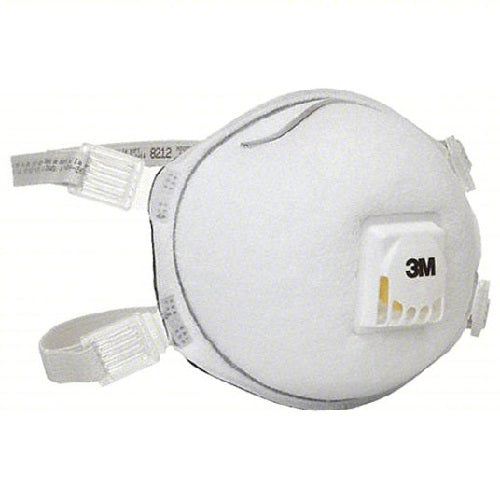
3M 8212 N95 Disposable Welding Respirator with Cool Flow Valve
3M
Original price
$95.30
Original price
$95.30
-
Original price
$95.30
Original price
$95.30
Current price
$91.99
$91.99
-
$91.99
Current price
$91.99
Short answer: the 3m 8212 n95 disposable welding respirator with cool flow is covered below on the specifications its own listing publishes, the st...
View full details
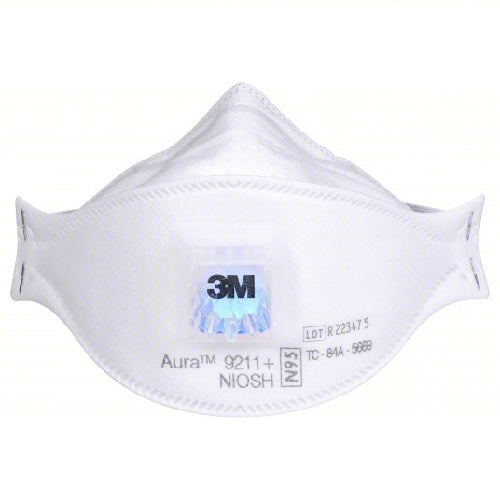
3M 9211+ N95 Disposable Respirator with Cool Flow Valve
3M
Original price
$38.82
Original price
$38.82
-
Original price
$38.82
Original price
$38.82
Current price
$29.17
$29.17
-
$29.17
Current price
$29.17
EDITORIAL REVIEW — 3M 9211+ N95 Disposable Respirator with Cool Flow Valve. Check price on Amazon →As an Amazon Associate, WC Safety earns from qu...
View full details
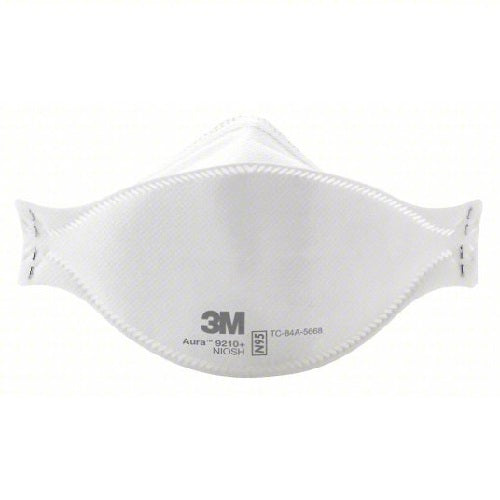
3M 9210+ N95 Disposable Respirator
3M
Original price
$39.18
Original price
$39.18
-
Original price
$39.18
Original price
$39.18
Current price
$31.58
$31.58
-
$31.58
Current price
$31.58
EDITORIAL REVIEW — 3M 9210+ N95 Disposable Respirator. Check price on Amazon →As an Amazon Associate, WC Safety earns from qualifying purchases. W...
View full details
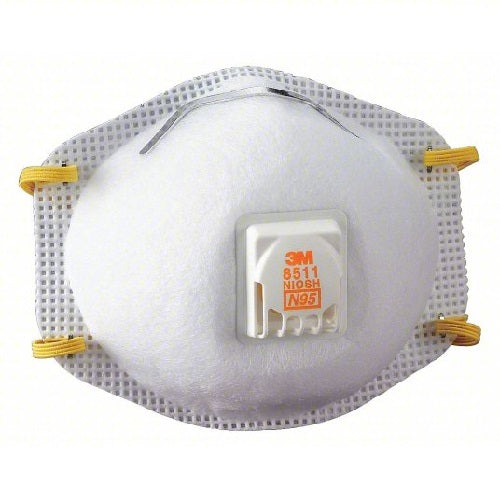
3M 8511 N95 Disposable Respirator with Cool Flow Valve
3M
Original price
$21.99
-
Original price
$21.99
Original price
$21.99
$24.99
$24.99
-
$24.99
Current price
$24.99
EDITORIAL REVIEW — 3M 8511 N95 Disposable Respirator with Cool Flow Valve. Check price on Amazon →As an Amazon Associate, WC Safety earns from qua...
View full details
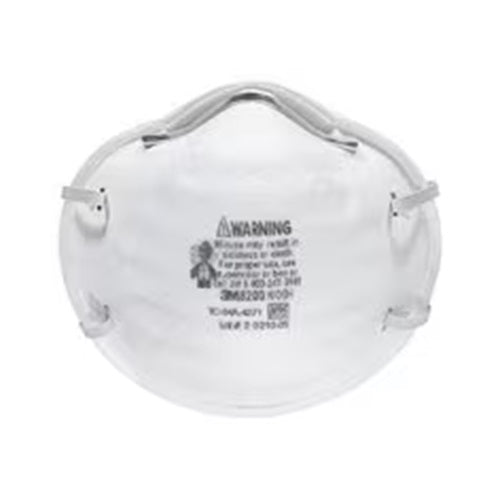
3M 8200 N95 Disposable Respirator
3M
Original price
$18.56
-
Original price
$18.56
Original price
$18.56
$21.99
$21.99
-
$21.99
Current price
$21.99
EDITORIAL REVIEW — 3M 8200 N95 Disposable Respirator. Check price on Amazon →As an Amazon Associate, WC Safety earns from qualifying purchases. WC...
View full details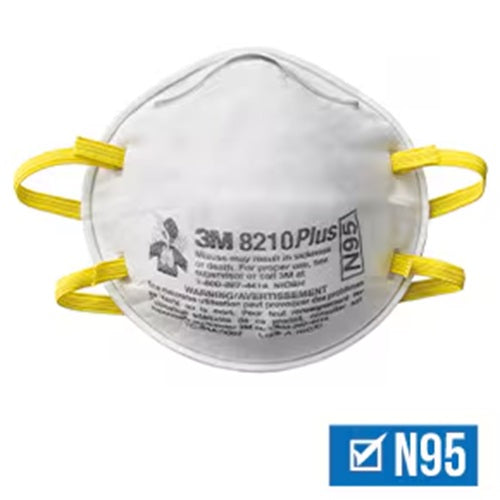
3M 8210Plus N95 Disposable Respirator
3M
Original price
$25.49
-
Original price
$25.49
Original price
$25.49
$25.49
-
$25.49
Current price
$25.49
EDITORIAL REVIEW — 3M 8210Plus N95 Disposable Respirator. Check price on Amazon →As an Amazon Associate, WC Safety earns from qualifying purchases...
View full details

3M 8210V N95 Disposable Respirator with Cool Flow Valve
3M
Original price
$157.87
Original price
$157.87
-
Original price
$157.87
Original price
$157.87
Current price
$128.16
$128.16
-
$128.16
Current price
$128.16
EDITORIAL REVIEW — 3M 8210V N95 Disposable Respirator with Cool Flow Valve. Check price on Amazon →As an Amazon Associate, WC Safety earns from qu...
View full details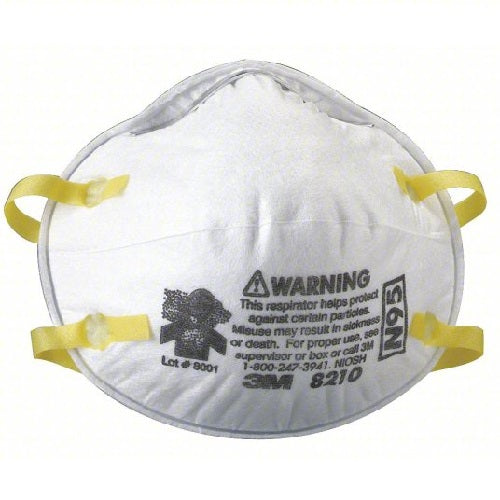
3M 8210 N95 Disposable Respirator
3M
Original price
$32.40
Original price
$32.40
-
Original price
$32.40
Original price
$32.40
Current price
$21.99
$21.99
-
$21.99
Current price
$21.99
EDITORIAL REVIEW — 3M 8210 N95 Disposable Respirator. Check price on Amazon →As an Amazon Associate, WC Safety earns from qualifying purchases. WC...
View full details