
N95 Filters, Prefilters and Respirators
NIOSH 42 CFR 84 · 95% Minimum Efficiency · Not Oil Resistant · 47 Respirators + 7 Filters & Prefilters
Do you need an N95 respirator or an N95 filter?
Short answer: if you have nothing else, you need a disposable respirator — the 3M 8210 or Moldex 2300N95 are the reference models. If you already own a reusable half mask, you want a prefilter that fits it: the 3M 5N11 for 3M bayonet, the Secure Click D7N11, the Honeywell North 7506N95, or the MSA Advantage snap-on.
Editor's pick: the 3M 8210 — the most widely fit-tested N95 on the market, which matters because a model your program already has fit-test records for is worth more than a marginally better mask nobody has been tested on.
Affiliate disclosure: WC Safety is an independent review site. As an Amazon Associate we earn from qualifying purchases made through links on this page, at no extra cost to you. We do not sell products directly, and no brand paid for placement.
Our methodology: how this collection was curated
We report NIOSH approvals exactly as issued and keep the two meanings of "N95" apart, because a disposable respirator and a prefilter component are not substitutes for one another. Where a filter needs a retainer or a specific facepiece to work, we say which. Surgical N95s are identified as such rather than mixed in silently, since the FDA clearance they carry is a separate claim from the NIOSH approval. And we list only products with a stated NIOSH approval — no KN95, KF94, FFP2 or P2 items appear here, because those are different countries' standards.
N95 Filters, Prefilters and Respirators (2026)
The N95 designation carries two facts: N means the filter media is not resistant to oil aerosols, and 95 means it captures at least 95% of airborne particles at the most-penetrating size. That is the floor of the NIOSH particulate scale under 42 CFR Part 84, which runs N, R and P across 95, 99 and 100. For workplace use, OSHA 29 CFR 1910.134 requires medical evaluation, fit testing and a written program before an employee wears any tight-fitting respirator, disposable included. Every model here can be confirmed against the CDC NIOSH-approved respirator list or the NIOSH Certified Equipment List.
What this collection covers
Fifty-four products from Moldex, 3M, Gerson, Honeywell, Gateway Safety, MSA, KleenGuard, Pyramex, Klein Tools and Kimberly-Clark, in three groups:
- 47 disposable N95 respirators — complete filtering facepieces: the 3M 8210 family, Moldex 2300N95 and the HandyStrap and AirWave lines, Gerson 1730 and 3230, Gateway TruAir and PeakFit, and the KleenGuard 3300 and 3400 series.
- 7 filters and prefilters — components for reusable respirators: 3M 5N11, Secure Click D7N11, Honeywell North 7506N95, Klein Tools 60507, and the MSA Advantage prefilter discs with their reusable snap-on holder.
- 3 surgical N95s — NIOSH-approved and FDA-cleared for fluid resistance: 3M Aura 1870+, 3M 1860S, and the Gerson 3230+. See surgical N95 respirators for that category in full.
Related: N95 respirators, disposable respirators, P100 filters for higher efficiency and oil resistance, nuisance relief respirators, the filters and cartridges hub, and half mask respirators — the facepieces the prefilters here attach to.
Respirator vs prefilter comparison
| Type | Example | Worn alone? | Needs |
|---|---|---|---|
| Disposable N95 | 3M 8210 | Yes — it is the respirator | Fit test |
| Surgical N95 | 3M 1870+ | Yes | Fit test; adds FDA fluid clearance |
| Snap-on prefilter | Honeywell 7506N95 | No | A matching reusable facepiece |
| Pre-filter + retainer | 3M 5N11 | No | 3M 501 retainer over a cartridge |
| Bayonet filter | Secure Click D7N11 | No | A Secure Click facepiece |
How to choose an n95 respirator filter or prefilter
What is the difference between an N95 respirator and an N95 prefilter?
A disposable N95 is the whole respirator — media, straps and nose clip in one unit you put on and throw away. An N95 prefilter is a component. It mounts on a reusable half mask, usually over a gas or vapor cartridge, and its job is to capture particulates before they reach the sorbent bed, which both protects you and makes the cartridge last longer. Worn on its own a prefilter does nothing, because there is no facepiece to seal it against your face. If you are searching for an n95 mask with filter and you do not already own a reusable respirator, what you actually want is a disposable N95. A reusable n95 mask with filter means a half-mask facepiece plus a matching prefilter — two purchases, not one.
Do 3M pre-filters need a retainer?
The 5N11 does, and getting this wrong leaves the filter unseated. On 3M bayonet facepieces the 5N11 and the 5P71 must be held in place against a cartridge by the 3M 501 filter retainer. The 2000-series filters — 2091, 2096, 2097 — are different: they attach directly to the facepiece with no extra part. The two look interchangeable in a parts bin and are not, so check the assembly instructions rather than the shape.
What makes a surgical N95 different?
Two approvals rather than one. A surgical N95 is NIOSH-approved as a respirator and cleared by the FDA as a surgical mask, which adds a fluid-resistance requirement for splash and spray. A standard N95 filters the same 95% of particles but makes no fluid-resistance claim at all. That difference matters in healthcare and in any work where blood or body fluids may be splashed, and nowhere else — for dust and fume, a standard N95 is the same filter.
What about KN95, KF94 and FFP2?
Those are other countries' standards, not NIOSH approvals. KN95 is Chinese, KF94 is South Korean, and FFP2 is European under EN 149. Their filtration requirements are broadly comparable on paper, but they are certified by different bodies under different test protocols, and none of them is an N95. Nothing in this collection carries those markings, and we would rather say so than let the classes blur — the same reason we do not list a "P200" or "N9" filter, neither of which exists.
Does N95 protect against oil aerosols?
No, and that is what the letter tells you. N-series media are not oil resistant, R-series are somewhat and time-limited, P-series are oil-proof. If your process involves oil mists, cutting fluids or certain paints, you need R or P media rather than N — see P100 filters and our P100 vs N95 guide.
Fit, reuse and replacement
Fit decides everything. A respirator that leaks at the cheeks delivers nowhere near its rated 95%, which is why OSHA requires an annual fit test for workplace use and why facial hair across the sealing surface disqualifies a tight-fitting respirator regardless of model. It is also why the most widely fit-tested models have practical value beyond their spec sheet — a mask your program already has records for can be issued today.
Disposables are single-use by design. Discard them when damaged, soiled, or noticeably harder to breathe through, and after any work with wet or heavily contaminated material, since moisture degrades filter media. Our reference on reusing an N95 covers the limits honestly. Prefilters follow the same logic — replace when breathing resistance rises — but the facepiece they mount on is cleaned and kept. And an unrated dust mask is not any of this: see what is a dust mask.
N95 filter FAQ
What does N95 mean?
N means the filter media is not resistant to oil aerosols; 95 means it captures at least 95% of airborne particles at the most-penetrating size. It is the entry level of the NIOSH particulate scale under 42 CFR Part 84.
What is the difference between an N95 respirator and an N95 prefilter?
A disposable N95 is a complete respirator you wear. A prefilter is a component that mounts on a reusable half mask, usually over a cartridge, to capture particulates and extend cartridge life. A prefilter alone protects nobody.
Do I need the 3M 501 retainer?
For the 5N11 and 5P71 pre-filters, yes — the 501 holds them against a cartridge. The 2000-series filters such as the 2091, 2096 and 2097 attach directly to the facepiece without it.
What makes a surgical N95 different from a standard one?
It carries FDA clearance for fluid resistance in addition to the NIOSH approval. Filtration is the same 95%; the extra claim is about splash and spray, which matters in healthcare.
Is KN95 or KF94 the same as N95?
No. KN95 is a Chinese standard and KF94 South Korean, certified by different bodies under different protocols. Neither is a NIOSH approval, and nothing in this collection carries those markings.
Does an N95 work against oil mists?
No. The N designation means not oil resistant. Oil mists, cutting fluids and some paints require R or P media — P100 being the highest.
Do I need a fit test?
For workplace use, yes — OSHA 29 CFR 1910.134 requires medical evaluation and annual fit testing for any tight-fitting respirator, disposables included.
Does facial hair matter?
Yes. Hair crossing the sealing surface prevents a seal and air bypasses the filter entirely. No model or strap tension compensates.
Can I reuse a disposable N95?
They are designed as single-use. Discard when damaged, soiled or harder to breathe through, and after wet or heavily contaminated work — moisture degrades the media.
Will an N95 prefilter fit any respirator?
No. Prefilters are specific to a fitting system — 3M bayonet, 3M Secure Click, North's own connector, MSA Advantage — and approval applies to the assembled respirator, not the component.
What does the exhalation valve do?
It vents exhaled air to reduce heat and moisture build-up, which makes extended work more tolerable. It protects the wearer identically; it simply does not filter what is breathed out.
Is a dust mask the same as an N95?
Only if it carries a NIOSH approval. An unrated comfort dust mask is not a respirator and provides no rated level of protection whatever it looks like.
Why trust WC Safety on respiratory protection?
WC Safety reviews workplace PPE full-time as an independent affiliate site — we do not sell products, hold no inventory, and accept no paid placements. Here that mostly means keeping categories that look alike genuinely apart: a disposable respirator is not a prefilter, a surgical N95 carries an FDA clearance a standard one does not, and KN95, KF94 and FFP2 are other countries' standards rather than NIOSH approvals. We list only products with a stated NIOSH approval, and we name the attachment rules — the 5N11 needs the 501 retainer, the 2000-series does not — because that is where assemblies actually go wrong. Standards referenced are NIOSH 42 CFR Part 84 and OSHA 29 CFR 1910.134. Reviewed by Steven Eaton, WC Safety editor. Last reviewed: July 2026.

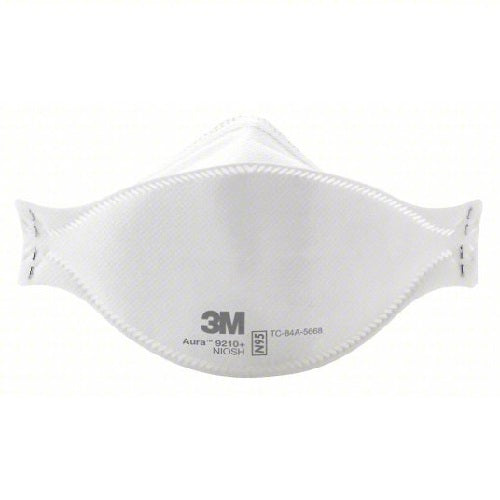
3M 9210+ N95 Disposable Respirator
3M
Original price
$39.18
Original price
$39.18
-
Original price
$39.18
Original price
$39.18
Current price
$31.58
$31.58
-
$31.58
Current price
$31.58
EDITORIAL REVIEW — 3M 9210+ N95 Disposable Respirator. Check price on Amazon →As an Amazon Associate, WC Safety earns from qualifying purchases. W...
View full details
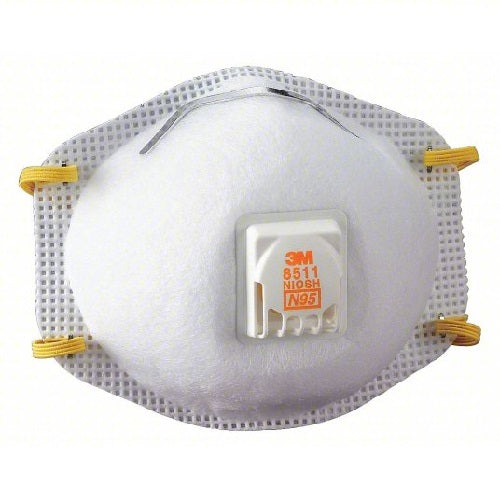
3M 8511 N95 Disposable Respirator with Cool Flow Valve
3M
Original price
$21.99
-
Original price
$21.99
Original price
$21.99
$24.99
$24.99
-
$24.99
Current price
$24.99
EDITORIAL REVIEW — 3M 8511 N95 Disposable Respirator with Cool Flow Valve. Check price on Amazon →As an Amazon Associate, WC Safety earns from qua...
View full details
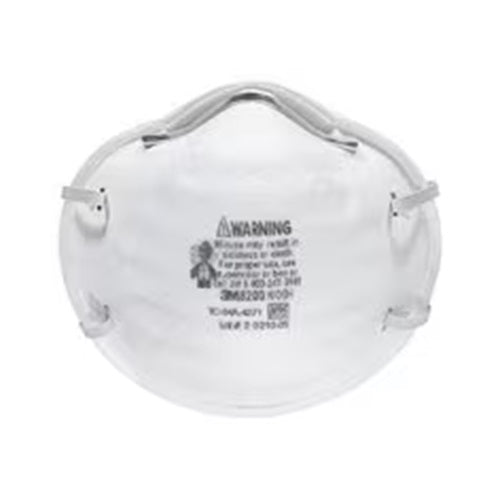
3M 8200 N95 Disposable Respirator
3M
Original price
$18.56
-
Original price
$18.56
Original price
$18.56
$21.99
$21.99
-
$21.99
Current price
$21.99
EDITORIAL REVIEW — 3M 8200 N95 Disposable Respirator. Check price on Amazon →As an Amazon Associate, WC Safety earns from qualifying purchases. WC...
View full details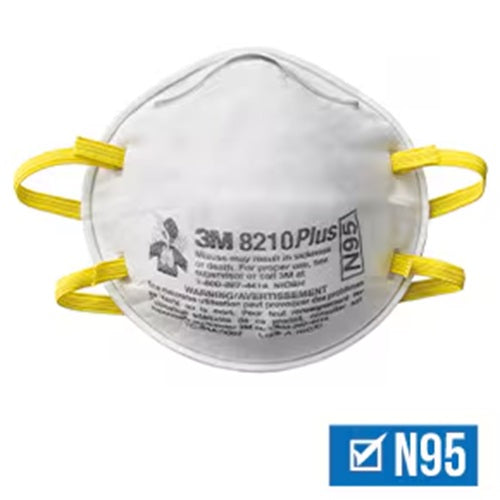
3M 8210Plus N95 Disposable Respirator
3M
Original price
$25.49
-
Original price
$25.49
Original price
$25.49
$25.49
-
$25.49
Current price
$25.49
EDITORIAL REVIEW — 3M 8210Plus N95 Disposable Respirator. Check price on Amazon →As an Amazon Associate, WC Safety earns from qualifying purchases...
View full details

3M 8210V N95 Disposable Respirator with Cool Flow Valve
3M
Original price
$157.87
Original price
$157.87
-
Original price
$157.87
Original price
$157.87
Current price
$128.16
$128.16
-
$128.16
Current price
$128.16
EDITORIAL REVIEW — 3M 8210V N95 Disposable Respirator with Cool Flow Valve. Check price on Amazon →As an Amazon Associate, WC Safety earns from qu...
View full details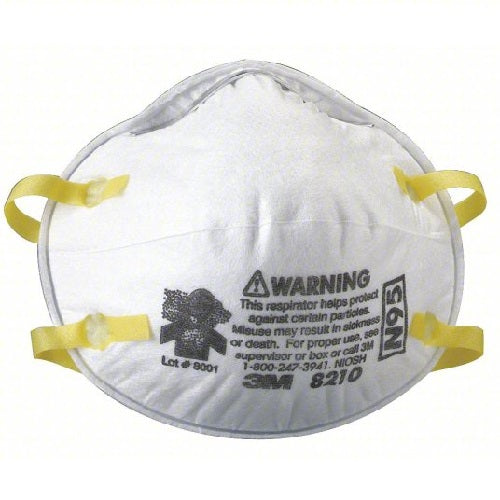
3M 8210 N95 Disposable Respirator
3M
Original price
$32.40
Original price
$32.40
-
Original price
$32.40
Original price
$32.40
Current price
$21.99
$21.99
-
$21.99
Current price
$21.99
EDITORIAL REVIEW — 3M 8210 N95 Disposable Respirator. Check price on Amazon →As an Amazon Associate, WC Safety earns from qualifying purchases. WC...
View full details